Mebban International Institute Experience Training Unusual
Aviation Short Course

Air Cargo
Operations Training

Cargo · Logistics · Documentation · DGR Awareness

Air cargo is the backbone of global trade — moving goods worth billions of dollars every day. This programme trains you to operate inside that system: handling shipments, processing documentation, applying safety compliance, and contributing to the logistics chain that keeps the world moving.

Course at a Glance
8Modules
4Phases
3–6Months
CertAwarded
AWB Documentation Training
DGR Awareness Included
Cargo Simulations & Role-Play
All KCSE Grades Welcome
What to Expect

Learning Objectives

This programme provides structured, practical training in how cargo moves through the aviation system — from acceptance and documentation to handling, safety compliance, and delivery. You will develop a working understanding of airline cargo operations, freight systems, and international aviation regulations.

Unlike theoretical aviation courses, this programme is built around real operational workflows — the same processes used by cargo agents, ground handlers, and logistics professionals working at airports and freight terminals today.

Also Part Of

Cargo Operations is Pillar 3 of the M.A.P Mebban Accelerated Program — integrated alongside cabin crew, customer service, business, and digital skills into one 12-week career accelerator. This standalone course earns its own certificate.
Enrol Now Admissions Info
Air Cargo Operations Training at Mebban International Institute
3–6 months
Hybrid delivery
All grades welcome
Certificate awarded
Why Air Cargo?

Less Talked About.
More In Demand.

Cargo is one of the most stable and technically rigorous careers in aviation — and one of the least competed for by graduates.

Global Demand

Air cargo supports international trade, e-commerce, pharmaceutical logistics, and perishable goods — sectors that never stop growing. Kenya is a major hub for East African air freight.

Career Stability

Less saturated than passenger-facing aviation roles. Cargo professionals with documentation and compliance skills are consistently sought after by airlines, ground handlers, and freight forwarders.

Technical Skillset

Develop structured, process-driven competencies — Air Waybill accuracy, DGR classification, cargo security — that are valued across aviation, logistics, and supply chain industries globally.

Industry Breadth

Applicable across airlines, airports, freight forwarding companies, courier services, logistics firms, and import/export operations. One skill set, multiple career doors.

8-Module Curriculum

Full Curriculum

Every module is delivered through classroom instruction, practical simulations, and assessed application — building competence that translates directly to operational roles.

01
Introduction to Air Cargo Industry
Role of cargo in aviation, types of cargo (general, special, dangerous), key stakeholders, and the global freight ecosystem
02
Cargo Acceptance & Handling
Acceptance procedures, packaging standards, labelling and marking requirements, weight and balance basics, and handling protocols
03
Air Waybill & Documentation
AWB structure and accurate completion, shipment tracking, documentation compliance, and the legal significance of correct cargo paperwork
04
Dangerous Goods Regulations (DGR)
Classification of dangerous goods, IATA handling restrictions, safety protocols, and awareness of international DGR compliance frameworks
05
Cargo Security & AvSec
Cargo screening procedures, threat identification, access control in cargo environments, and compliance with aviation security frameworks
06
Logistics & Supply Chain Basics
Freight forwarding concepts, import/export flow, the role of customs, and how cargo logistics connects to the broader supply chain
07
Customer Service in Cargo
Client communication in cargo environments, professional handling of delays and damaged shipments, and operational conduct standards
08
Digital Systems & Cargo Technology
Introduction to cargo management systems, shipment tracking platforms, digital AWB processing, and technology used in modern freight operations
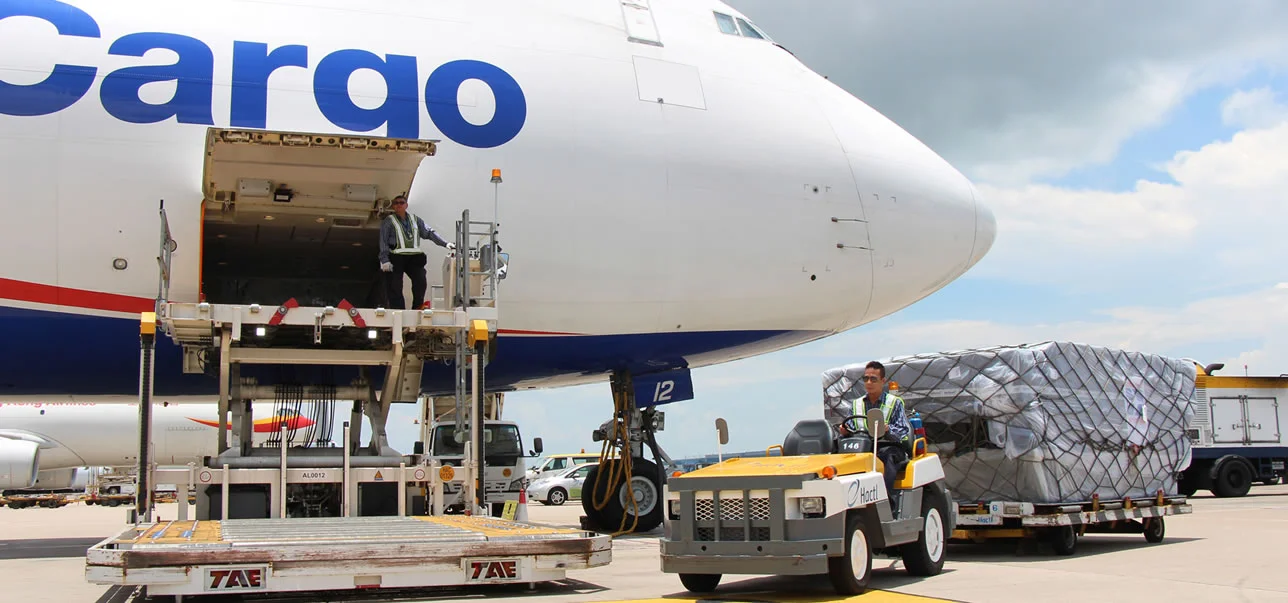
Aviation cargo operations environment
Operational Training
"This programme trains you to operate inside the system that moves the world's goods by air."

Every module is connected to a real task in a real cargo environment — not just theory on a page.

Training Phases

How You Learn

A four-phase model that takes you from industry awareness through to operational competence and assessed readiness for employment.

01

Industry Foundation

Understanding the air cargo ecosystem — how freight moves, who the stakeholders are, and where you fit in as a professional in this environment

02

Documentation & Compliance

Hands-on Air Waybill training, dangerous goods classification exercises, security compliance, and the paperwork that controls every shipment

03

Practical Simulations

Role-play as cargo agents, supervisors, and handlers. Case studies on delays, damaged cargo, and compliance challenges in real operational scenarios

04

Assessment & Certification

Comprehensive evaluation through practical demonstrations, documentation tasks, and examination. Graduates receive the Mebban Certificate of Completion

Career Pathways

Real Jobs.
Real Salaries.

Cargo graduates enter one of aviation's most operationally critical career tracks — with clear progression from entry roles to senior management positions.

Entry Roles — Immediate After Graduation

Where You Start

  • Cargo Agent — airline or ground handler
  • Ramp Agent — airside cargo handling
  • Warehouse Assistant — freight terminal
  • Freight Assistant — forwarding company
  • Logistics Assistant — courier or supply chain
  • Documentation Clerk — import/export operations
Growth Roles — 2–5 Years Experience

Where You Go

  • Cargo Supervisor — terminal operations
  • Operations Controller — flight operations
  • Freight Coordinator — logistics management
  • Logistics Manager — supply chain leadership
  • Compliance Officer — DGR & AvSec
  • Cargo Sales Executive — airline commercial
Learning Outcomes

What You Will Be Able to Do

Upon completion graduates will demonstrate the following verified competencies in real cargo environments.

  • Process cargo shipments accurately from acceptance through to documentation and dispatch
  • Complete and verify Air Waybills to the accuracy standards required in live cargo operations
  • Identify, classify, and apply correct handling procedures for dangerous goods categories
  • Apply aviation security and screening protocols within cargo terminal environments
  • Operate within cargo workflows covering freight forwarding, customs, and logistics coordination
  • Communicate professionally with clients, supervisors, and stakeholders in logistics settings
  • Navigate digital cargo tracking and management systems used in modern freight operations
Related Courses

Build On This Foundation

Cargo Operations connects naturally with these Mebban programmes — combine them for maximum career impact.

Browse All Courses
Start Your Career in Aviation Logistics

Train for the System That
Moves the World

Cargo professionals are in demand across airlines, airports, freight forwarders, and logistics companies. Applications are open — contact our team to confirm your place and start your journey into aviation logistics.